

 Testimonials
Rebuilding after illness: a year on, Constance Hamel looks back on the La Vie Kintsugi × Map & Match partnership
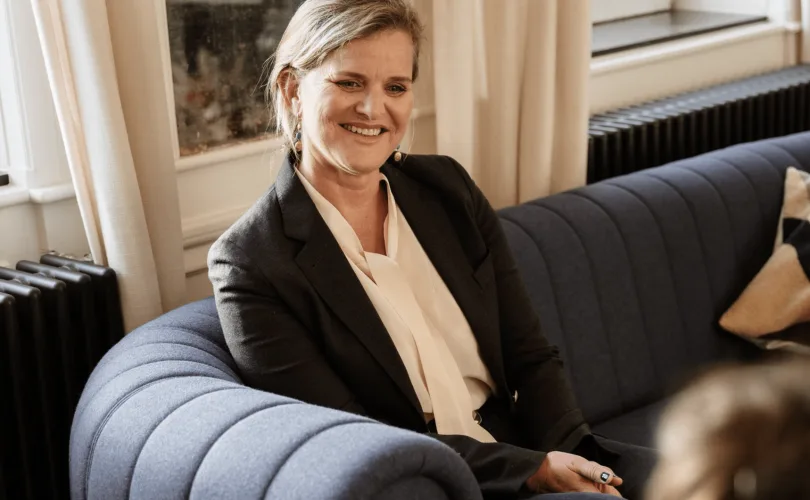
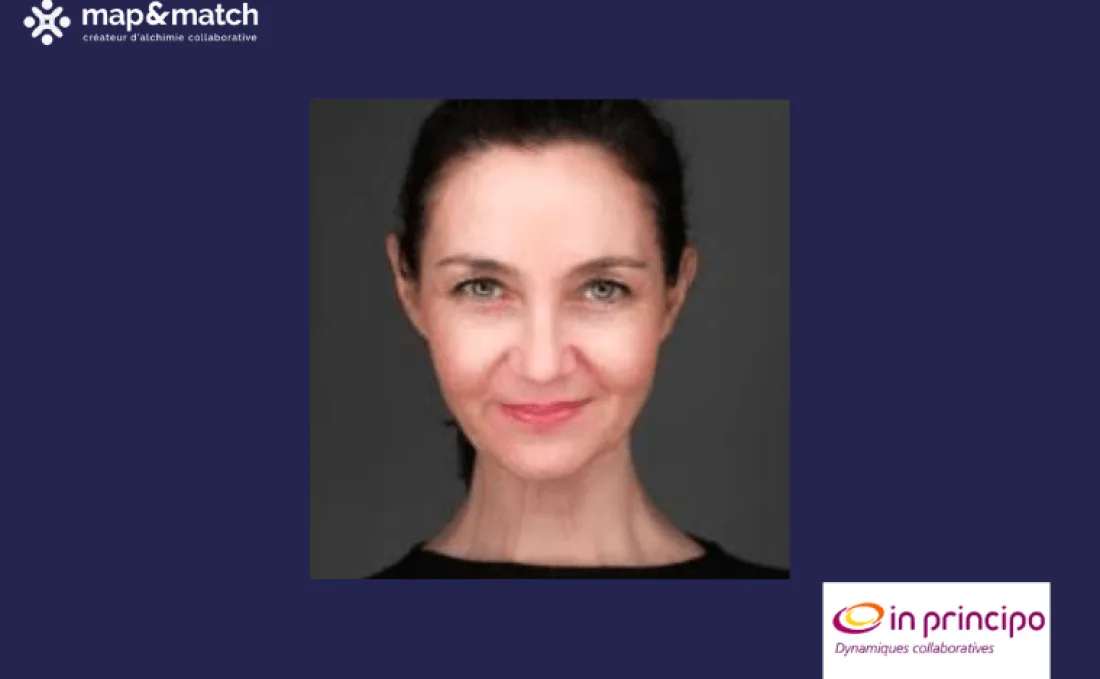
Read the storyDelphine Hervot is a coach, facilitator and trainer in one-to-one support. After several years in international leadership roles in broadcasting, she now works on management and culture change, and on individual transformation through coaching.
 Reading time: 4 min read
Want to go further?
See the platform in 30 minutes, with an expert.
Share this article

Delphine Hervot is a coach, facilitator and trainer in one-to-one support. After several years in international leadership roles in broadcasting, she now works on management and culture change, and on individual transformation through coaching.
A certified Map & Match partner, she tells us how she moved from a management role inside a company to a coaching practice of her own.
After 15 years in leadership and team management roles in an international corporate environment, I realised that what interested me was developing people, and managers above all — not KPIs, the P&L or process improvement.
What I enjoyed most in my job was helping managers and directors grow. So I decided to refocus on what actually drove me day to day.
There were many steps. I started with training in change management, and it was there that I came across the idea of management transformation. That, I thought, is what interests me. Digging into it, I felt the need to train in facilitation in order to support that kind of change.
Having trained and practised as a facilitator, I realised facilitation was a means for me, not an end. Still looking for the best way to support managers' development, I concluded that coaching was what would let me do it — and let me build on everything I had learned in change and facilitation. I took a long certified one-to-one coaching course, over 18 months.
Alongside all that training, I had already started working for myself, doing facilitation, consulting and coaching.
The last training I took was Map & Match. It mattered to me to have a tool that is simple, understandable and highly practical for supporting change in individuals and in teams.
So moving from a company to coaching was a real journey. It started with wanting to support managers, and it took several experiences and several courses before I became a professional coach. Along the way, you could say I went through my own transformation. Coaching was a path for me, and it looks a lot like what I now offer the people and teams I work with.
Knowing what managers, directors and executives are actually up against. I have been a manager, a director, a vice-president, on an executive committee, on a board — so I know those challenges from the inside.
That experience gives me an embodied form of leadership when I work with a person or a team. I have lived it and practised it, I understand their problems, and it is not just theory. It helps enormously, and it is real added value in my work. The situations that come up with team members are very concrete, and they were my daily life. I also worked closely with every kind of organisational question, and have set up several types of organisation myself.
That matters to me, because it lets me bring experience and expertise together. Having lived in different company cultures, different organisational cultures and different national cultures also means I can support people on international moves.
Beyond what I learned in my recent training, I have also trained in non-violent communication, which helps a great deal with my own stance.
In the coaching path I offer, I include the Map & Match questionnaire and a debrief on the talents behind the work someone enjoys. That tells me what a person genuinely likes doing, where they will contribute most, and whether they are in the right place at the right time.
I use it both in one-to-one coaching and with teams. I used it recently with a team at Decathlon, to build the team's performance through the dynamics of its talents. Starting with the Map & Match questionnaire, in individual or team coaching, is a fine way in — and when coaching a manager it is an effective way to work on real situations.
Get support. I became the coach I did not have when I went through that transition myself. I personally needed a period of "fertile emptiness" to work out what I really wanted to do. That period could have been far shorter, and my training path far better chosen, if I had done some work on myself at the start. I am not saying a degree of wandering is unhelpful or unnecessary. But when someone is alongside you, it becomes a framed, reassuring exploration that makes it much easier to act on what you find.
Want to go further?
See the platform in 30 minutes, with an expert.
Share this article
TestimonialsRebuilding after illness: a year on, Constance Hamel looks back on the La Vie Kintsugi × Map & Match partnership
Read the story Testimonials
Meet our Italian partner – Cecilia Spanu
Read the story Testimonials
Mind Partners × Map & Match: when a B Corp commitment strengthens a long-term partnership
Read the storyWe measure how this site is reached and used so we can improve it. These cookies are only set with your agreement, which you can withdraw at any time. Learn more