

 Testimonials
Rebuilding after illness: a year on, Constance Hamel looks back on the La Vie Kintsugi × Map & Match partnership
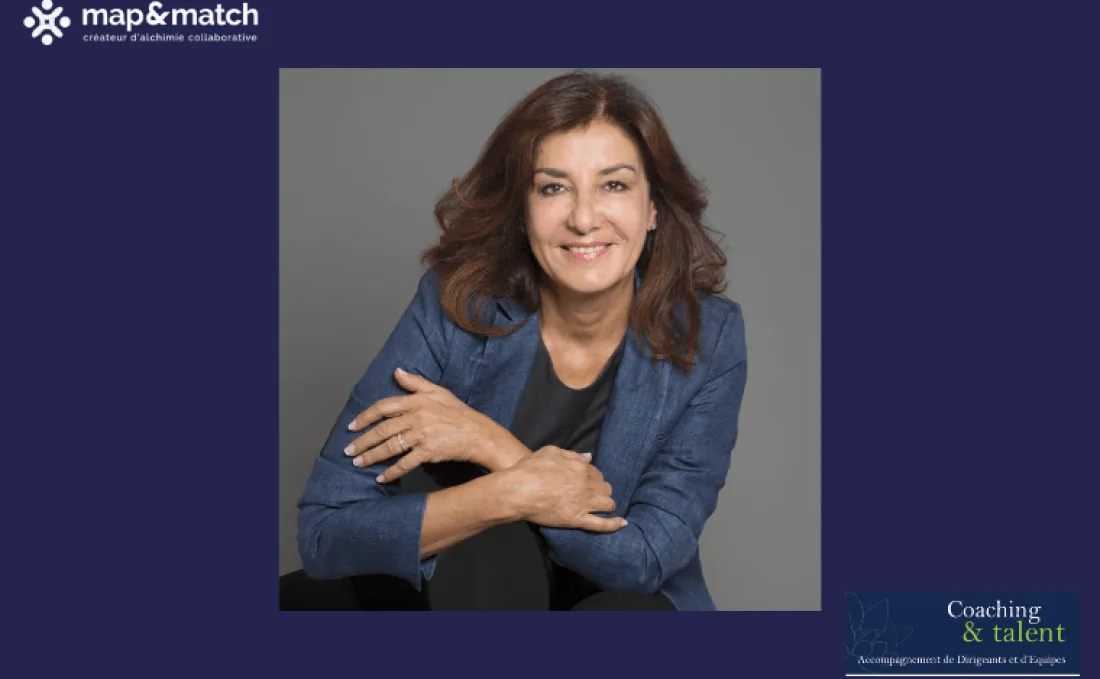
Read the storyNorma is an engineer with more than 20 years of experience leading teams of over 700 people and major international projects in IT and digital transformation. She now works with executives and managers taking on new roles, driving management change or looking for performance. Certified in Map & Match since 2019, she shares what she has learned about supporting project managers.
 Reading time: 7 min read
Want to go further?
See the platform in 30 minutes, with an expert.
Share this article

Norma is an engineer with more than 20 years of experience leading teams of over 700 people and major international projects in IT and digital transformation. She now works with executives and managers taking on new roles, driving management change or looking for performance. Certified in Map & Match since 2019, she shares what she has learned about supporting project managers.
To anyone who wants to become a manager, I often say that it is an expertise like any other. People assume the most valued role is project manager or programme lead. That is not true. Managing is a real expertise, and you work at it.
The first dimension a manager has to hold is the human one. That means taking account of the individual dynamic, the collective dynamic and the complementarity of the talents in the team. A project needs motivation and complementarity to succeed. When everyone has the same talents, it can fail. Many companies look only at people's technical dimension, and that is not enough: you have to look at the collective dynamic of the team that will do the work.
I like to talk about rotating leadership. We do not all have the same talents for the same phases of a project. I once coached someone who was searching for meaning, and understanding her talents was a revelation for her.
You see people who are brilliant at the initiation phase of a project and much less so afterwards, because only the beginning motivates them. Once the creative phase is delivered and delivery proper begins, their interest goes. Like a recipe, a project needs all of its ingredients: the technical side, the human side, complementarity and motivation.
I do not think there is a typical project manager profile. There are talented people with real leadership in this field, and there are professionals who do the job without ever really thriving in it.
Read through the Map & Match mapping, you need a Manager talent, an enjoyment of designing and structuring a project (the Organizer talent) and a taste for keeping information moving (the Connector talent) so that every stakeholder can work together and the project stays connected to the rest of the organisation. Without an appetite for the Accomplisher dynamic, a project manager may neglect delivery and the pragmatism it takes to make the thing feasible. And since a project manager is there to carry the team to success and help each person succeed in their own role, they are a hands-on manager — a Coach talent.
That would be the ideal profile for a project manager to hold the role with pleasure and commitment. But it is rare to have all those talents, and some of them are sometimes uncomfortable. That is exactly when I work with people: not enjoying something does not mean you cannot do it, you just have to learn to do it in a way that fits who you are. And the profile also depends on context — a highly demanding project is not the same job.
We are rarely motivated by every phase of a project, so rotating leadership means handing over the running of the project when it enters a phase that no longer motivates you. On one project I worked with someone who had deep technical expertise. He was the leader on that subject. You have to be able to recognise other people's talent: having leadership in one area does not mean pulling everything towards yourself. A good recipe needs every ingredient — and it still needs a conductor, to decide, prioritise and allocate.
That is the most common case, and it is truer still when most project managers step into a new role.
When the team is already in place, what matters is observing, identifying talents, understanding what motivates each person, and adjusting. I once worked with a sales team where the company did not want to keep one of its members. I watched him, and I understood what motivated him and how he works. I did not try to change him; I trusted his talents, and he became the best salesperson they had.
You should not put someone into a way of working that goes against their nature. You have to see where they will create the most value. He was a creative: he found extraordinary solutions for clients, and did not work the way engineers classically do. He struggles to organise himself up front, but he produces a great deal, he is very creative and he finds genuinely interesting ways of doing things.
So there are no rules. Once you have understood the team and made your adjustments, you have to give each person objectives, talk with them, and help them know themselves better and value themselves more. Once each person understands their own talents, they need to know their teammates' talents too, so that they work better together.
I once had a very talented expert who dreamed of becoming a project manager. I could see he did not have the profile for it, and I could see his face light up when he talked about his own field. At a client, he delivered exceptional work in that field, on a project that had never managed to get off the ground, and offered them something rich enough to be rolled out across the whole group.
The client was so pleased that when the expert asked for a project manager assignment, they said yes. It was a disaster: as a project manager, he simply could not do it. One day the client rang me to say they no longer wanted to work with him. It was hard. He had to be helped to see that he is an expert, and that as an expert he brings immense value. As an expert he is irreplaceable; as a project manager he was completely out of his depth.
An average project manager can be replaced without difficulty. An expert in their field cannot. Everyone needs to understand their talents and where they are irreplaceable, because that is where their natural leadership lies.
Knowing your team well, knowing each person's talents and skills individually, and identifying complementarity in the collective — those three things are essential. Field a team of goalkeepers and it will not work: everyone exercises the same leadership and nothing complements anything.
Then there is the collective dynamic, which has to push towards a shared objective everyone believes in. Something bigger than us, that each person can contribute to and own a share of.
That is why I like rotating leadership. The people who are excellent at the very start, in the creative phase and at launch, will not be the best in delivery, or at maturity when the project's lessons are drawn.
Team dynamics, self-knowledge and sharing are the keys every project manager should keep in mind.
You have to be willing to lose a little time to gain some. Those moments spent aligning on the same view of the project, knowing each other better and working better together give the team and each of its members energy and commitment — and lay the foundations of collective performance.
Want to go further?
See the platform in 30 minutes, with an expert.
Share this article
TestimonialsRebuilding after illness: a year on, Constance Hamel looks back on the La Vie Kintsugi × Map & Match partnership
Read the story Testimonials
Meet our Italian partner – Cecilia Spanu
Read the story Testimonials
Mind Partners × Map & Match: when a B Corp commitment strengthens a long-term partnership
Read the storyWe measure how this site is reached and used so we can improve it. These cookies are only set with your agreement, which you can withdraw at any time. Learn more