

 Case studies
Jamespot: when understanding what drives people becomes a management lever
Read the case studyMap & Match worked with a client on its move to agile ways of working. An external consultant had put the agile processes in place, but the IT director was still struggling to get teams to make those new ways of working their own.
 Reading time: 4 min read
Want to go further?
See the platform in 30 minutes, with an expert.
Share this article

Map & Match worked with one of its clients on an organisational shift to agile. An external consultant, a specialist in setting up agile processes, had done their part — and the IT director was then left with the harder problem: getting the teams to make those new ways of working their own.
The main challenge was to keep the agile philosophy alive inside the company culture. To help people take ownership of the new processes and make them last, the IT director and the transformation project lead decided to rely on the Map & Match platform.
Their questions were:
With Map & Match, the answers took shape around three objectives:
Within the Scrum framework, Map & Match invites a team to look at:
People end up sharing a common vocabulary for reading their own internal dynamic, and understand at the same time how to adapt to their environment and fit into it.
Everyone also gets a clearer grip on their role — Scrum Masters and Product Owners in particular — thanks to the Map & Match role profiles, defined specifically for the needs of agile and Scrum teams (see below).
The engagement ran in several steps:
Step 1: presenting the platform and the Map & Match approach to the IT department. That conversation with the leaders in charge of the agile transformation is what identifies and confirms the project.
Step 2: to roll the platform out to everyone, each person completed their T5 ProfileTM, followed by an individual debrief on what naturally drives them. People were then invited to share their profile with their team, so that everyone could see the dynamics and drivers of their colleagues — and understand what will make working together easy, or hard.
Step 3: to make the shift last, the project lead was trained on the platform so as to run the programme independently. From that point on, they were able to debrief each profile, support each person in their agile role, enrich the hiring process by having candidates complete their T5 ProfileTM, build squads, and support the managers of existing teams as agile processes took hold.
Step 4: Map & Match then checked that the squads matched the agile role profiles — that the T5 TalentsTM were well spread across them — and adjusted the teams where they were not.
Step 5: finally, the leadership team used Map & Match in hiring, to complete the squads. Having candidates take the T5TM assessment says a great deal about what they genuinely enjoy doing, and gives real reassurance about fit and cohesion.
Mapping every person's profile showed where the squads were complementary and where they were not — and therefore where the friction and the points to watch were.
Working from the French IT job framework (SIGREF), Map & Match also characterised the T5 TalentsTM each of the main agile roles calls for (the Product Owner role is shown below).
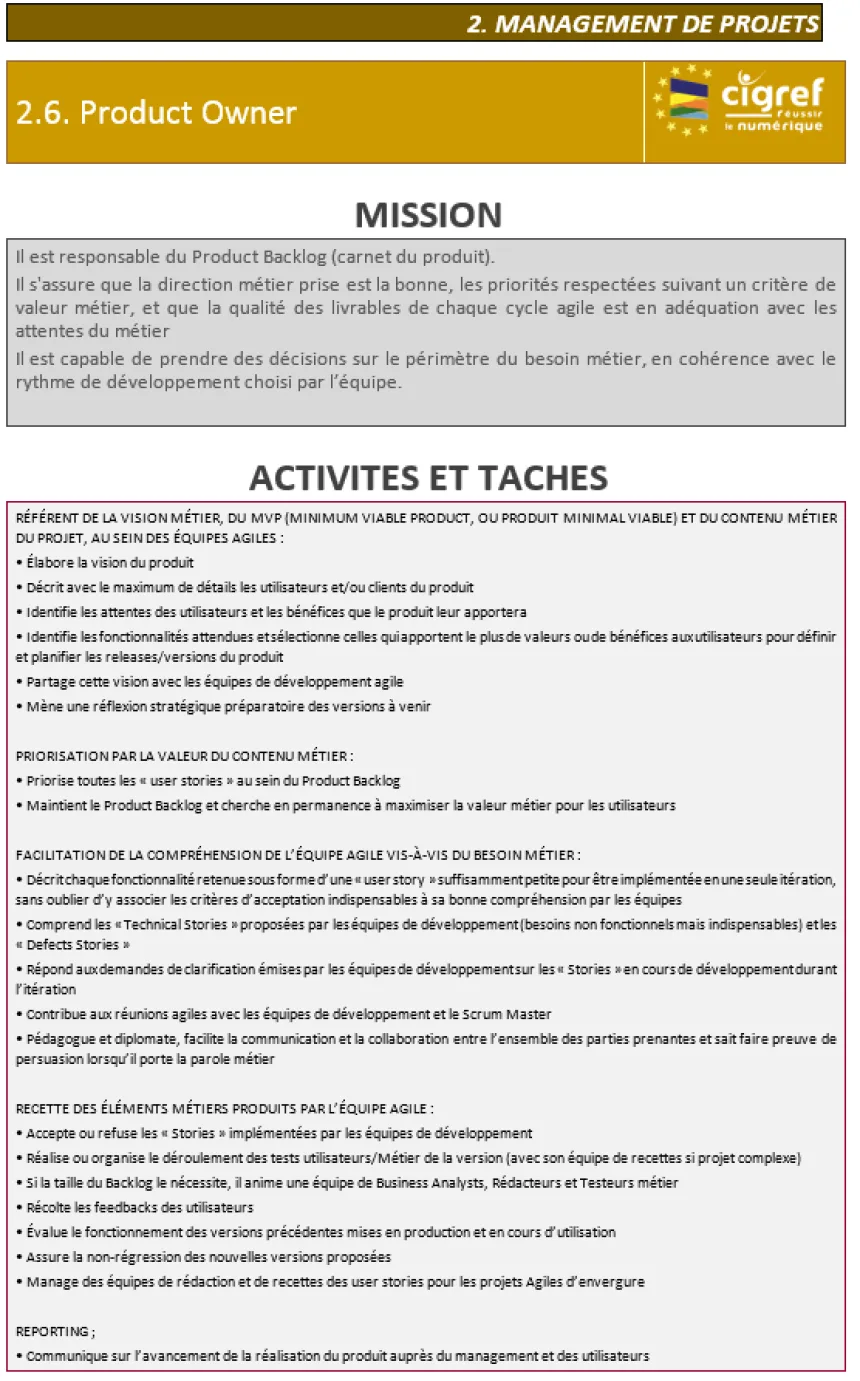
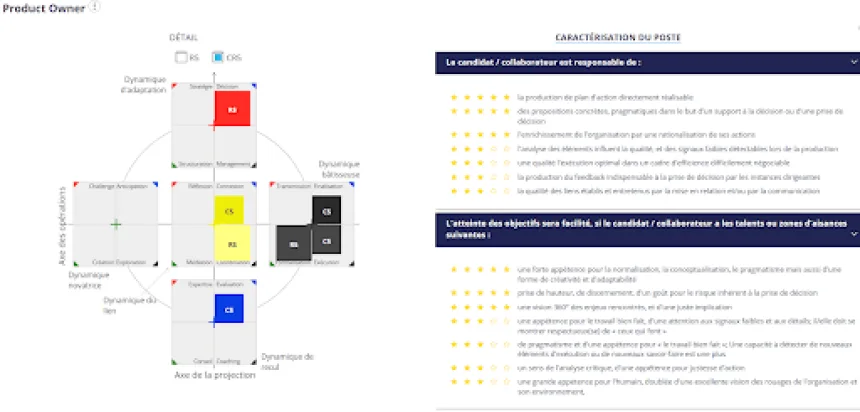
With that reference in hand, the IT director could check whether the people holding a role also had the natural drivers needed to sustain it over time.
The benefits of the Map & Match approach were to:
The platform helped embed a company culture built on collaboration and agility, and make it last.
Want to go further?
See the platform in 30 minutes, with an expert.
Share this article
Case studiesJamespot: when understanding what drives people becomes a management lever
Read the case study Case studies
Supporting executives in career transition: what the Map & Match and CDME partnership taught us
Read the case study Case studies
What are the key success factors of an HR transformation?
Read the case studyWe measure how this site is reached and used so we can improve it. These cookies are only set with your agreement, which you can withdraw at any time. Learn more