

 Case studies
Jamespot: when understanding what drives people becomes a management lever
Read the case studyOur client Comdata (now Konecta) won second prize in the Ambition category of the 2021 Digital HR Awards, run by Future of HR with Deloitte, for its HR transformation project with Map & Match. Its HR development director looks back on what made it work.
 Reading time: 5 min read
Want to go further?
See the platform in 30 minutes, with an expert.
Share this article

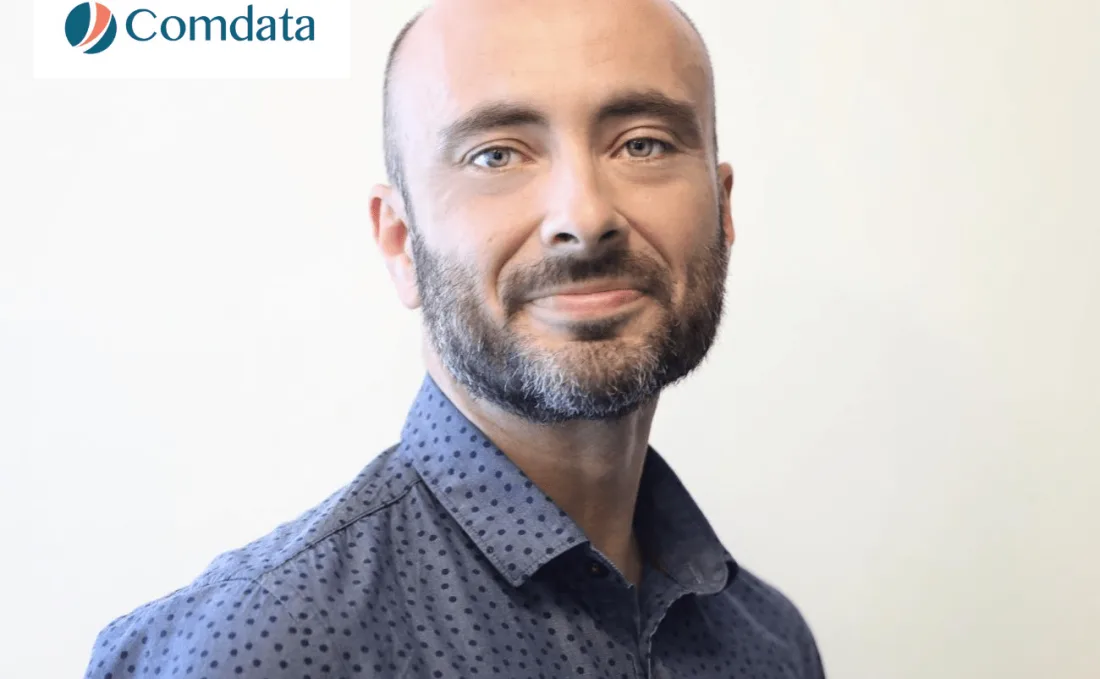
Our client Comdata (now Konecta) won second prize in the Ambition category of the 2021 Digital HR Awards, run by Future of HR with Deloitte, for its HR transformation project with Map & Match.
The Ambition category rewards a project — finished or under way — whose transformation goals are genuinely ambitious, sometimes well beyond HR itself.
We took the opportunity to ask Yan Leblanc, HR Development Director for the France region, what he now sees as the key success factors of an HR transformation.
Comdata Group wanted to support its HR transformation after several significant structural changes since 2017, which accelerated in 2020:
The group's intention from the outset was to turn those changes into an opportunity to anchor a distinct Comdata identity and culture ("OneComdata"), while keeping its agility and continuing to build communities as the pillars of its organisation.
That is how "Better know each other, better grow together" was born, sponsored at the highest level by the CEO and run jointly by the Transformation Office, the HR community and the Map & Match teams. The project set out to map the DNA of the top 150 managers through the talents behind the work they enjoy, and align them with what the new strategic roadmap demanded of management.
It was rolled out in 21 countries and 5 languages, over four months.
Three things really made the difference:
Globally, the project ran in several sequences:
The obstacles were essentially about adoption, and about making clear that the T5™ assessment is in no way a tool for sorting "good" profiles from "bad" ones. They disappear quickly once the approach and the model are clearly explained and everyone can see what they get out of them.
The rollout covered the executive committee and a top line of more than 150 managers. More than 120 further managers then joined the project. Together, that let us compile the data, map it and benchmark the results — anchoring the approach and turning it into decision support for HR, hiring and mobility processes.
Adoption has been a clear success, as the satisfaction score from the managers involved shows (4.7 out of 5). And the most tangible measure of adoption is when managers spontaneously ask to run T5™ assessments and mappings themselves, which is now the norm. That is when you know it has taken root.
We also measure that ownership through the cascade across the organisation: managers asking, unprompted, to map their own teams to know each other better and build their collective performance.
It has to be sponsored at the highest level and led by an executive committee member. The approach implies a deep, long-term shift in the company's management culture.
Second, method. The Map & Match teams guided us through each stage so that the rollout succeeded and the project stuck, particularly on change management and communication.
And of course transparency and clarity in how the solution is introduced. Training HR professionals in the approach is essential here: it is what lets them inform, convince and carry adoption.
Want to go further?
See the platform in 30 minutes, with an expert.
Share this article
Case studiesJamespot: when understanding what drives people becomes a management lever
Read the case study Case studies
Supporting executives in career transition: what the Map & Match and CDME partnership taught us
Read the case study Case studies
How does a young start-up secure today's performance and tomorrow's growth?
Read the case studyWe measure how this site is reached and used so we can improve it. These cookies are only set with your agreement, which you can withdraw at any time. Learn more