

 Case studies
Jamespot: when understanding what drives people becomes a management lever
Read the case studyOur partner MyDevPro was supporting the digital transformation programme of one of its clients, a French university hospital. The project had been on hold since the start of the Covid-19 crisis, when every resource was pulled into patient care and emergency management. Bringing the IT department back onto the project is where MyDevPro's support and the Map & Match platform proved decisive.
 Reading time: 5 min read

Want to go further?
See the platform in 30 minutes, with an expert.
Share this article

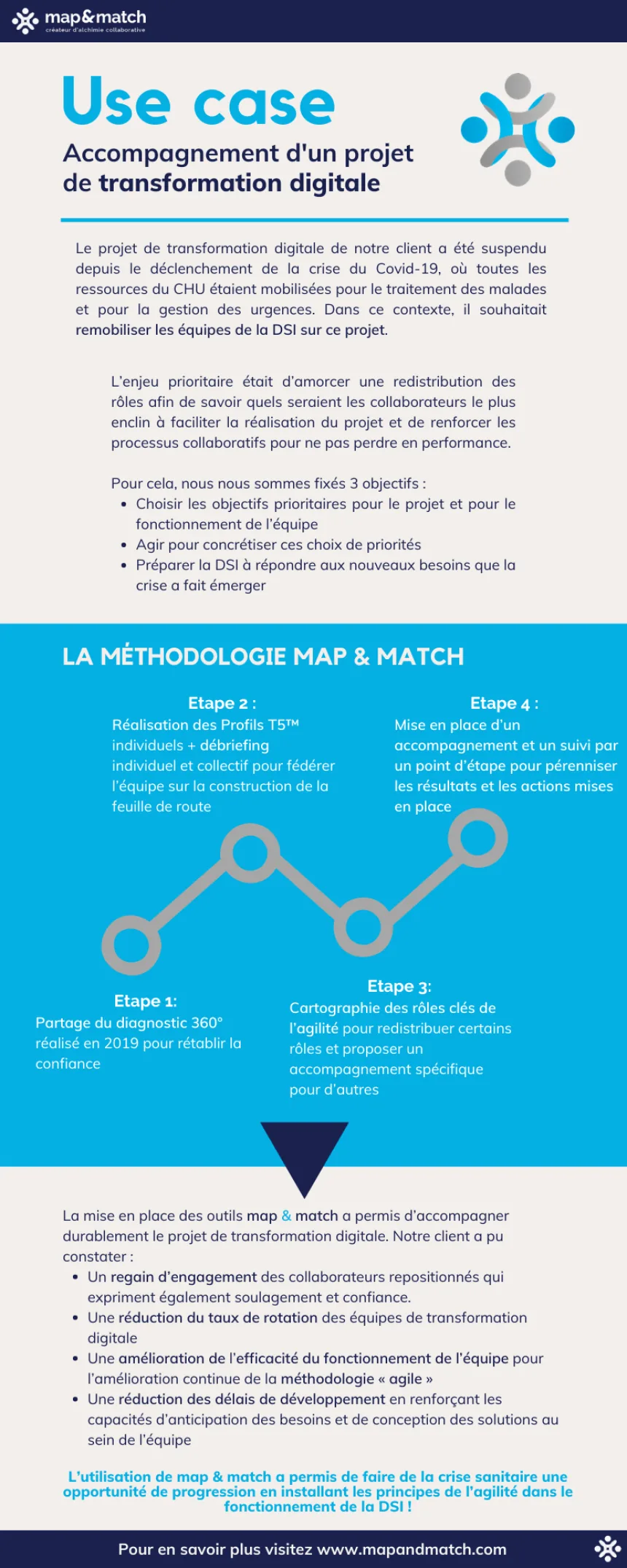
Our partner MyDevPro was supporting the digital transformation programme of one of its clients, a French university hospital (CHU). The project had been suspended since the start of the Covid-19 crisis, when every resource in the hospital was pulled into patient care and emergency management. In that context, MyDevPro's support and the Map & Match platform were what made it possible to bring the IT department back onto the digital transformation project.
The team faced three challenges:
The first priority in re-engaging the team was to strengthen the way people work together and to start redistributing roles. MyDevPro's support therefore focused on the behaviours that build trust and the behaviours that destroy it, across the three dimensions of trust — competence, communication and the relational contract.
Step 1: alongside the 360° diagnosis carried out in 2019 for the manager in their environment, the first task was to rebuild trust by sharing that diagnosis with the whole team.
Step 2: the aim here was to re-engage people and strengthen collaborative working. Every team member discovered their T5 ProfileTM and was debriefed individually. A diagnosis of how the team works was first shared with the manager, then with everyone, to build a plan for success. A team seminar followed, to align everyone around a shared roadmap.
Step 3: working from the standard map of key agile roles offered by Map & Match, the leadership team redistributed some roles and put dedicated support in place for others. That reallocation is what made the agile processes stick in the way the project ran.
Step 4: the final step is follow-up — a review point that makes the results and the new ways of working last.
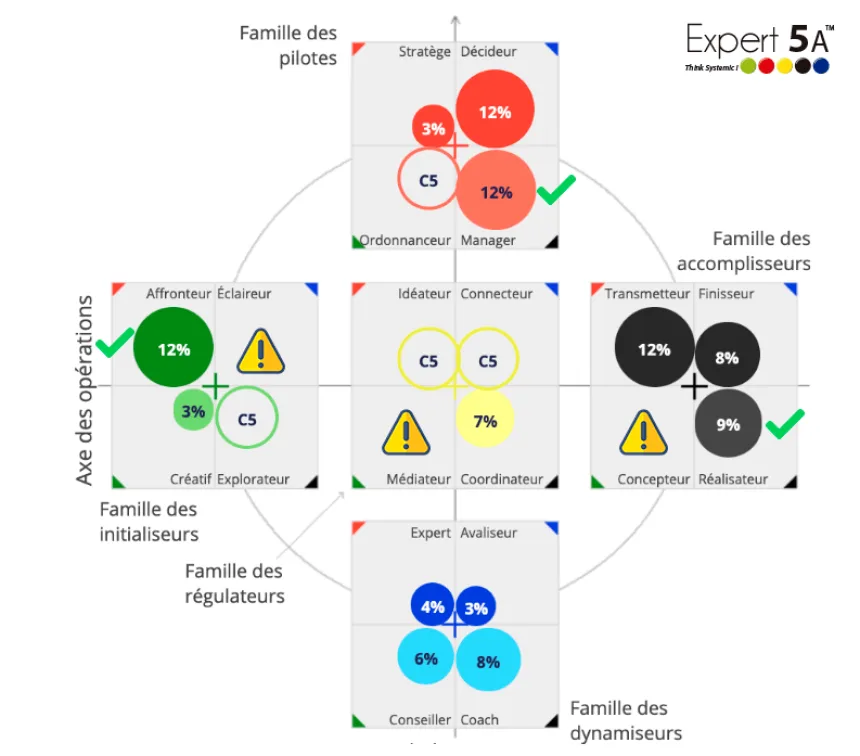
Reading the team as a whole through Map Team showed that:
With an analysis that is constructive and free of judgement, the manager was able to redistribute roles by matching natural talents to what the digital transformation project actually required.
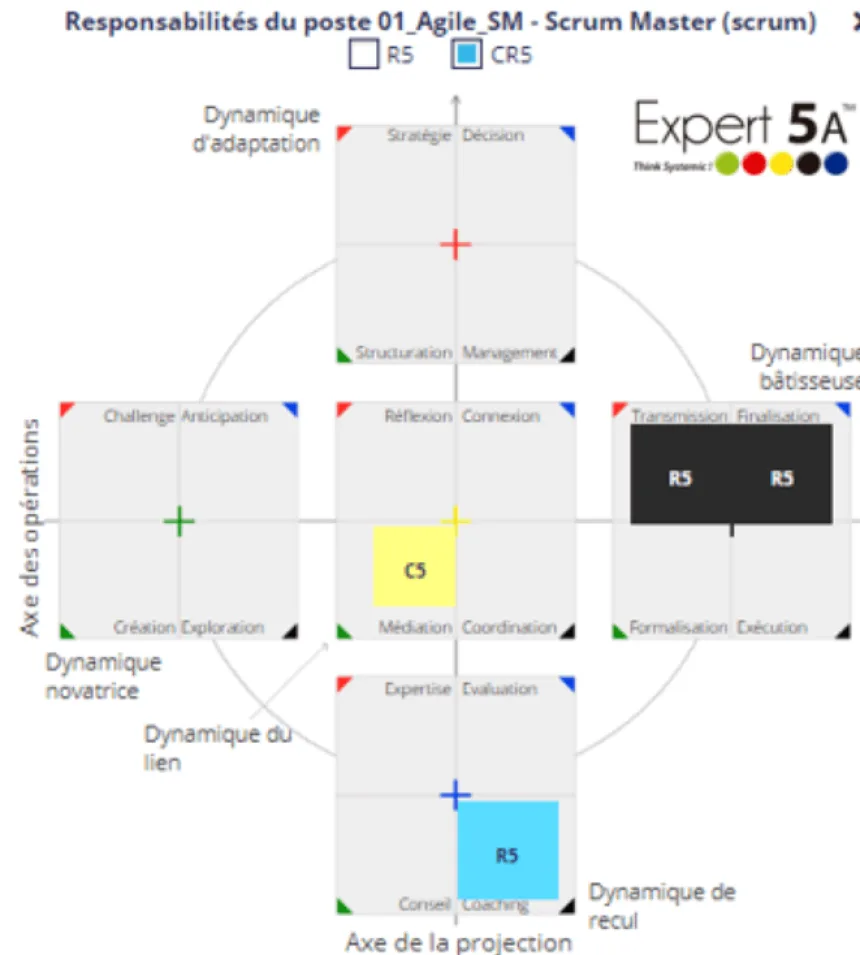
The map of key agile roles showed objectively why some people were barely engaged in their work. Acting on that — and staying constructive throughout — the manager redistributed roles to fit natural talents to the work at hand, which led to the creation of a new Scrum Master position (see below).
At the follow-up review, four months after the engagement, the manager shared the following benefits with MyDevPro, and attributed them to Map & Match:
Using Map & Match turned the health crisis into an opportunity, by embedding the principles of agility in the way the IT department works.
*Scout: the challenge of the unknown is what drives them. They can project themselves, and project actions or plans, without being held back by consequences or obstacles. Anticipation is one of their defining traits.
*Conceptor: giving an idea its shape is what drives them. They are the ones who anchor innovation in the life of a business, and they enjoy turning an idea into a plan of action.
*Mediator: keeping a group together is what drives them. They know how to move people or a project forward while preserving a form of balance. They value cohesion.
Want to go further?
See the platform in 30 minutes, with an expert.
Share this article
Case studiesJamespot: when understanding what drives people becomes a management lever
Read the case study Case studies
Supporting executives in career transition: what the Map & Match and CDME partnership taught us
Read the case study Case studies
What are the key success factors of an HR transformation?
Read the case studyWe measure how this site is reached and used so we can improve it. These cookies are only set with your agreement, which you can withdraw at any time. Learn more