

 Case studies
Jamespot: when understanding what drives people becomes a management lever
Read the case studyIn its earliest phase, Map & Match worked with the founder of a data expertise consultancy and their first two partners, to secure the performance of a business still being launched and to anticipate the growth challenges ahead.
 Reading time: 4 min read

Want to go further?
See the platform in 30 minutes, with an expert.
Share this article

In its earliest phase, Map & Match worked with the founder of a start-up specialising in data expertise consulting, and with their first two partners, to secure and improve the performance of a business still being launched, and to anticipate the growth challenges ahead.
Map & Match stepped in first to help the partners get their governance working well, then to understand the firm's DNA and the soft skills profile it would look for in future hires.
Step 1: getting the governance right. Reading a governance team — or any team — starts with each person discovering themselves. Everyone completes their profile and is debriefed individually. They then discover the DNA of their collective in a workshop: how the team works, its strengths and the points to watch given the venture in front of them. That analysis showed how far this team could take the business before hyper-growth, or a loss of profitability, caught up with them for lack of the processes an industrialised firm needs.
Step 2: working with the whole firm on operational performance. Reading the DNA of everyone in the firm, and knowing each other's profiles far better, is what installed a lasting team spirit. Seeing the collective set against its own challenges gave people what they needed to work better and meet their clients' expectations.
With the Map Team maps (the team application of the Map & Match platform), the team could see the dynamics its goals required. Overlaying that on the picture of their own collective showed them objectively where their strengths were, and which blind spots had to be addressed to perform better. From that, they co-created a roadmap setting out the processes to put in place to serve clients more efficiently.
Step 3: identifying the profiles to hire next. The earlier steps let the founding team anticipate their hiring needs and define the profiles that would make the existing team more complementary — and that would let the new joiners thrive in the work itself.
Step 4: finally, with the "Start-up" subscription, the client used the platform entirely independently, while still being able to call on a certified Map & Match consultant for the decisions that matter — choosing between shortlisted candidates, or handling management questions with people or teams in difficulty.
The strength of Map & Match is the model behind it, which sets out the 20 keys to a system working at its best. The platform identifies the talents (T5) a team or an individual needs in order to deliver on its mission and perform.
The governance team's DNA revealed that no one in the team carried the "Organizer*" talent. That told the three founders something useful: in a launch phase, where the challenge is to grow revenue and deliver each assignment well, taking no pleasure in structuring and organising is not a problem.
It becomes one later. Once the firm reaches a certain size, that dynamic is what keeps profitability up and puts in place the organisation strong growth demands. In senior hires — the people who might one day become partners — the team will need to favour candidates who carry that talent.
At an operational level, the team identified the talents its assignments depend on (expertise, delivery, completion, transmission). Those are the dynamics it now looks for when hiring.
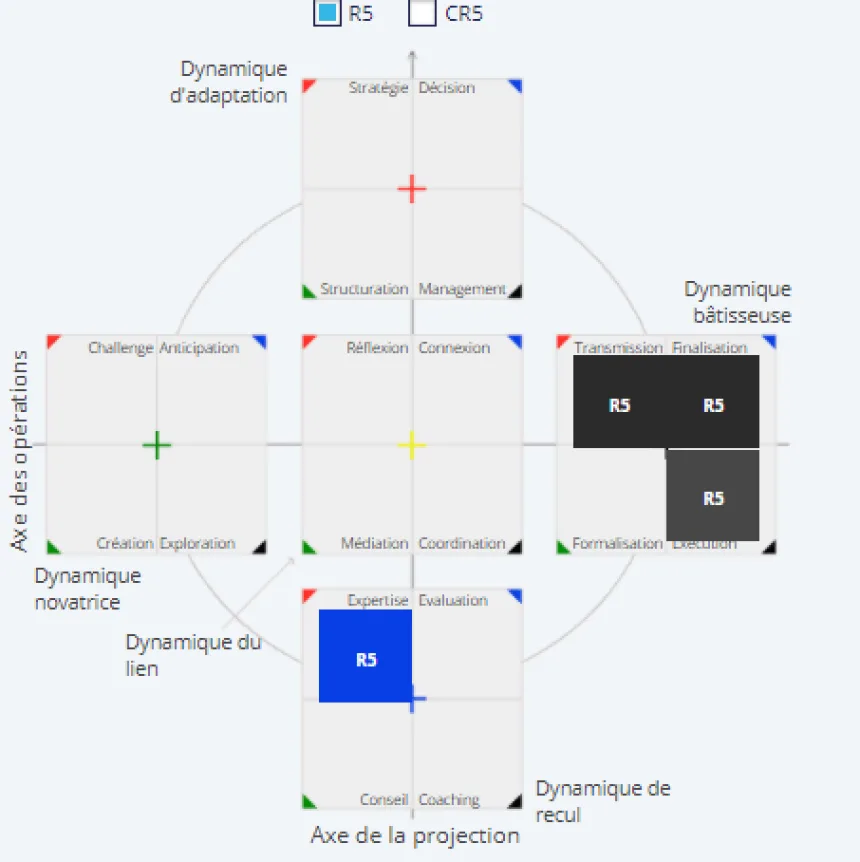
The roadmap they built together also sharpened the processes to put in place at the end of an assignment (completion and transmission).
In short, Map & Match let the start-up put hard evidence behind its current performance, improve it with a roadmap of its own making, and anticipate what growth would require — both of its governance, when the time came, and of its operational hiring in the short term.
Are you a start-up looking to build team performance and see your future needs coming? Take a look at our offer for start-ups of fewer than 30 people.
*Organizer: structuring actions and projects is what drives them. Through it they look for efficiency, which is a constant objective for them.
*Expert: building knowledge on a subject they care about is what drives them. They aim to become a genuine reference in that field.
*Transmitter: keeping projects going over time is what drives them. They are teachers at heart.
*Finisher: taking projects to their highest level of completion is what drives them. They bring the work to its final point, well past where most of us stop.
*Doer: carrying out tasks — their own or other people's — is what drives them. They enjoy putting all their craft into getting them done.
Want to go further?
See the platform in 30 minutes, with an expert.
Share this article
Case studiesJamespot: when understanding what drives people becomes a management lever
Read the case study Case studies
Supporting executives in career transition: what the Map & Match and CDME partnership taught us
Read the case study Case studies
What are the key success factors of an HR transformation?
Read the case studyWe measure how this site is reached and used so we can improve it. These cookies are only set with your agreement, which you can withdraw at any time. Learn more